- FR


 S’inscrire
-
- Ventes Classiques
- Ventes passées
- Plus
- Acheter
- Vendre
- Plus
- Galerie
- Commerce d'art
- Maison d'Édition
- Kornfeld aujourd’hui
- L'histoire de la Maison
- Informations


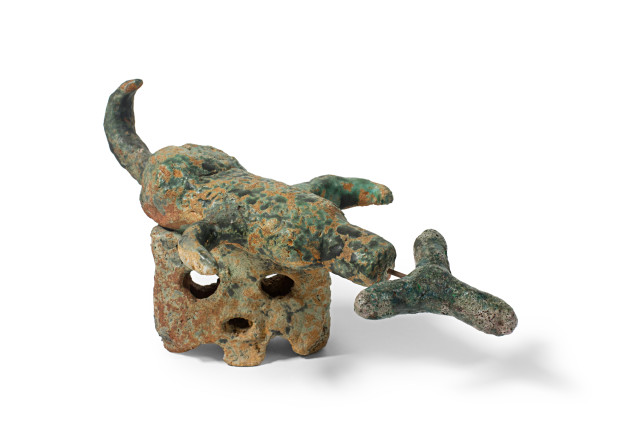







Barcelona 1893 - 1983 Mallorca


1956
Earthenware with coloured engobe painting, glazed
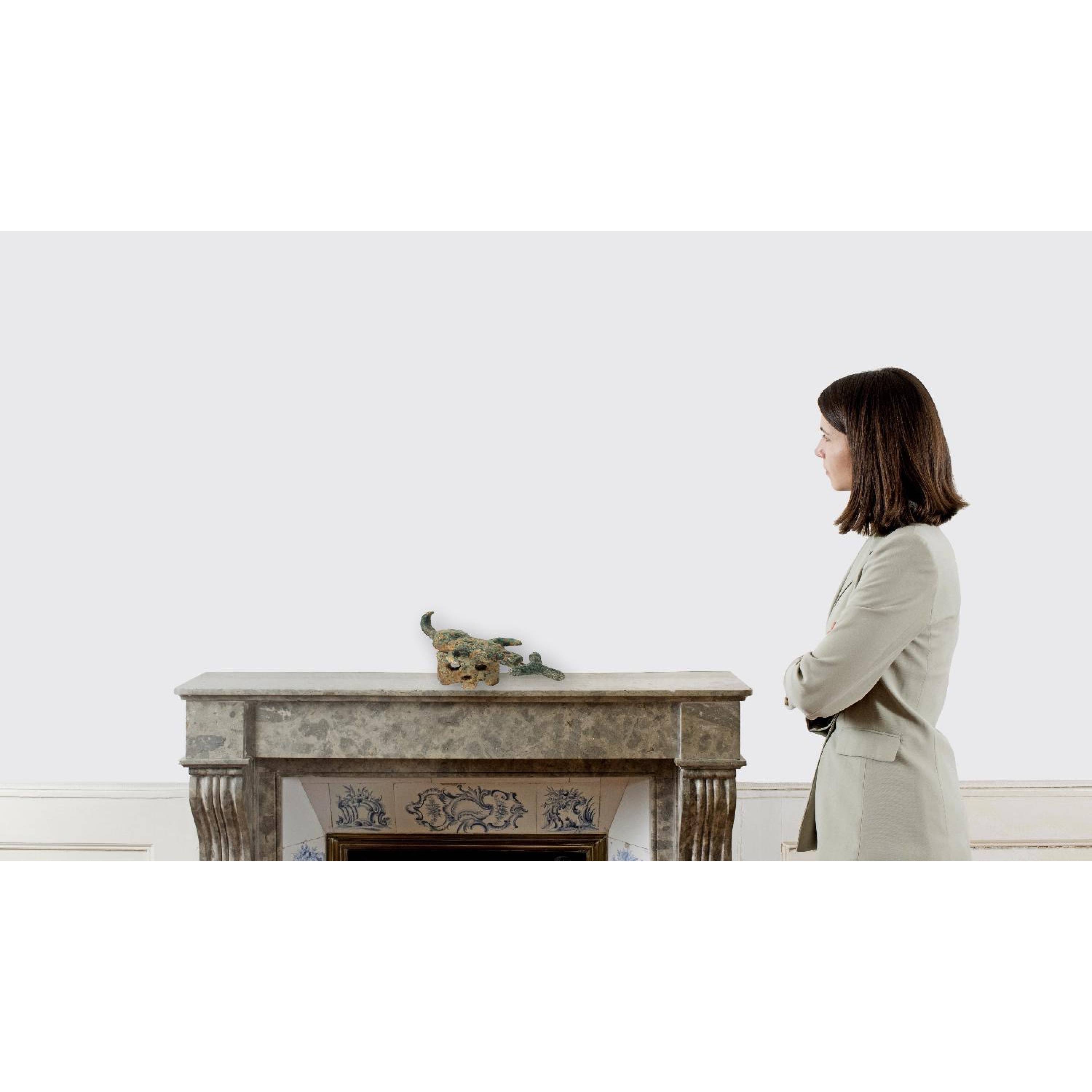
17,2x33x18,5 cm
Signed on the underside by the artist and by the ceramist "Miro / ARTIGAS"
Joan Punyet Miró/Joan Gardy Artigas, Joan Miró and Joseph Llorens Artigas, Ceramics, Catalogue raisonné, 1941-1981, Paris 2007, cat. no. 293, pag. 248, reprod.
Collection Hermann Wünsche, Bonn
Gallery Maeght, Paris, there acquired by
Private collection
Auction Christie's, London, 19.6.2007, cat. no. 469, there acquired by
Private collection
Auction Sotheby's, New York, 15.11.2016, cat. no. 354
International private collection
José Pierre/José Corredor-Matheos, Céramiques de Miró et Artigas, Paris 1974, no. 269, pag. 127, reprod.
Francesc Miralles, Llorens Artigas, Barcelona 1992, no. 710, pag. 290, reprod.
Paris 1956, Galerie Maeght, Miró-Artigas, Terres de Grand Feu, cat. Derrière le miroir (no. 87-88-89), no. 29
Minimally rubbed, in very good overall condition
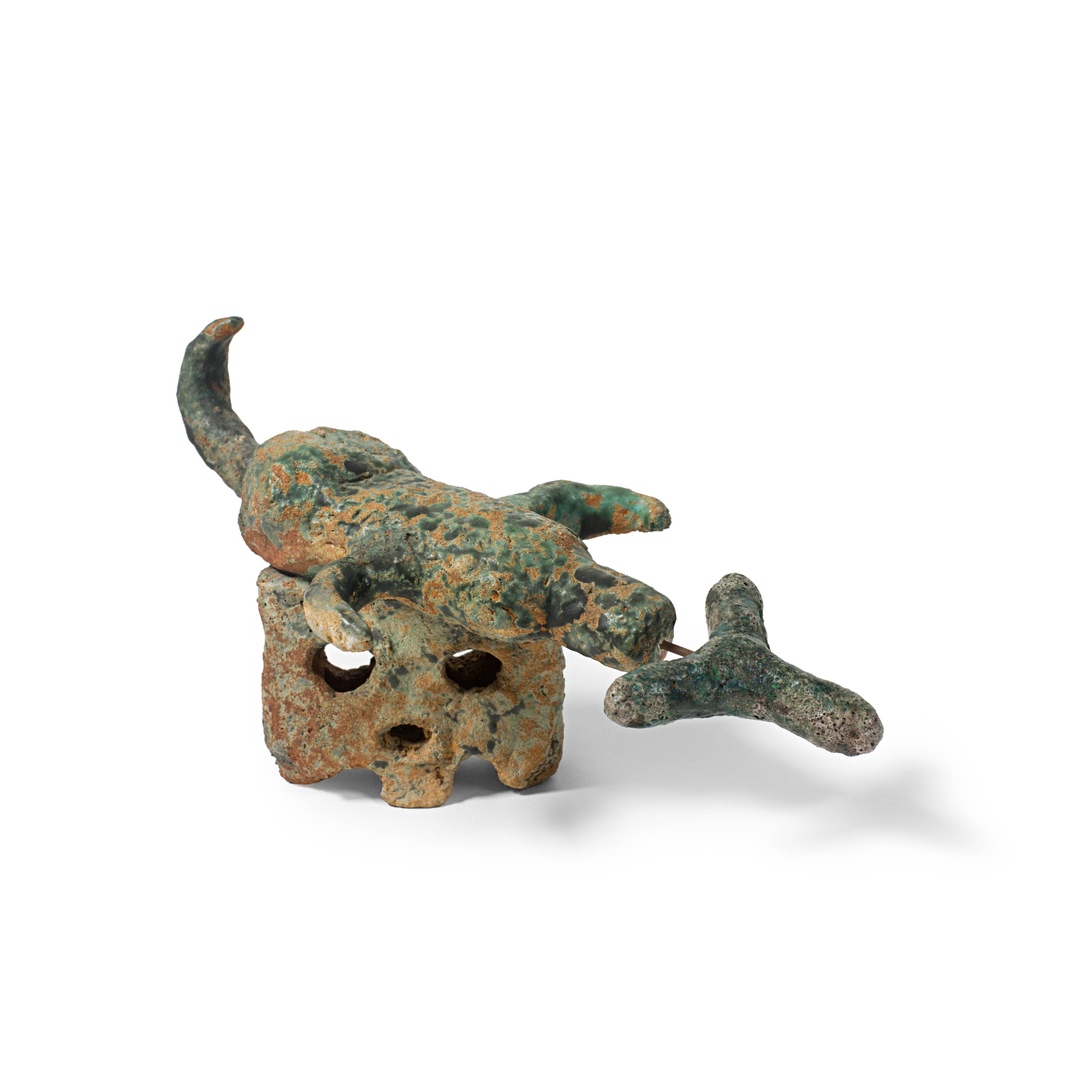
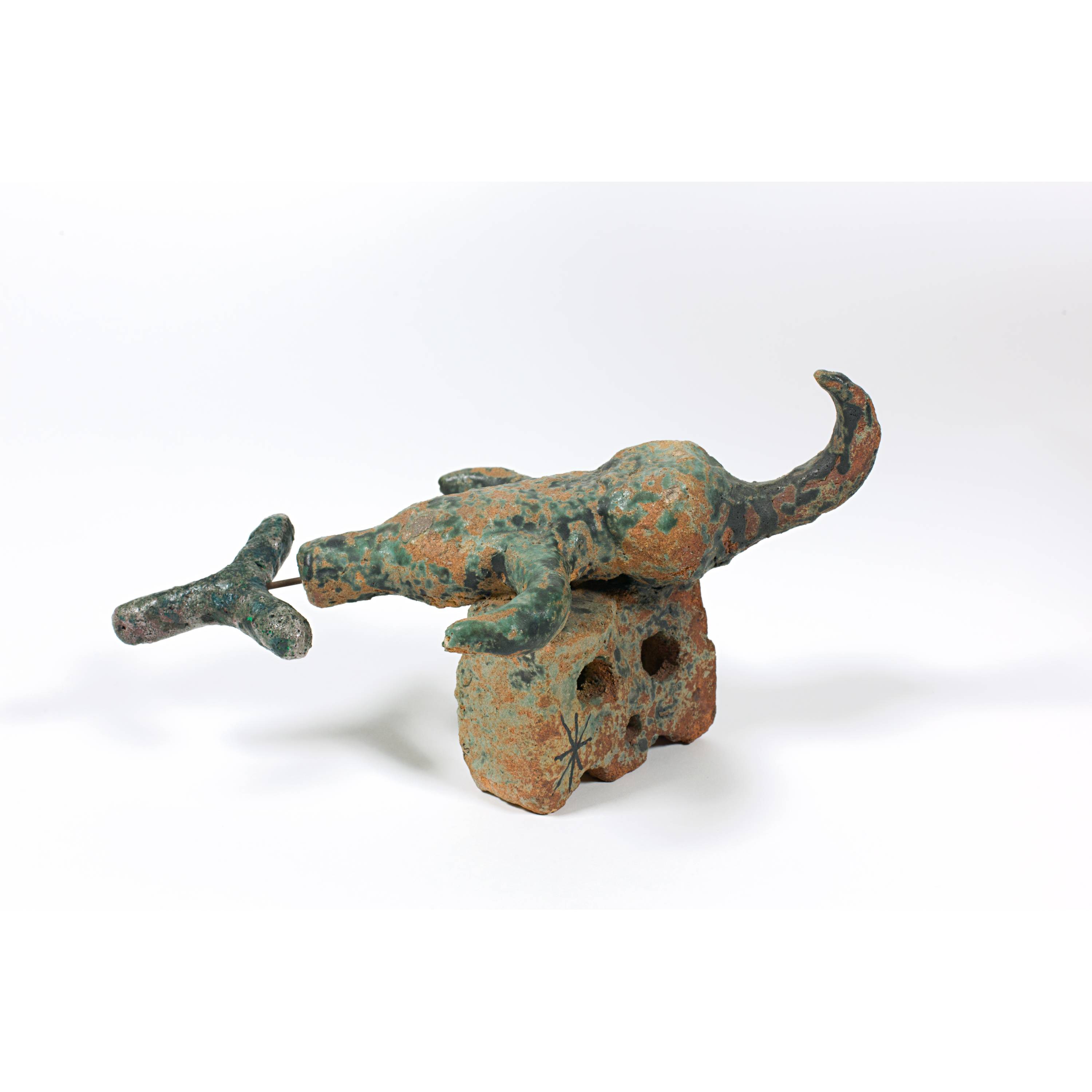
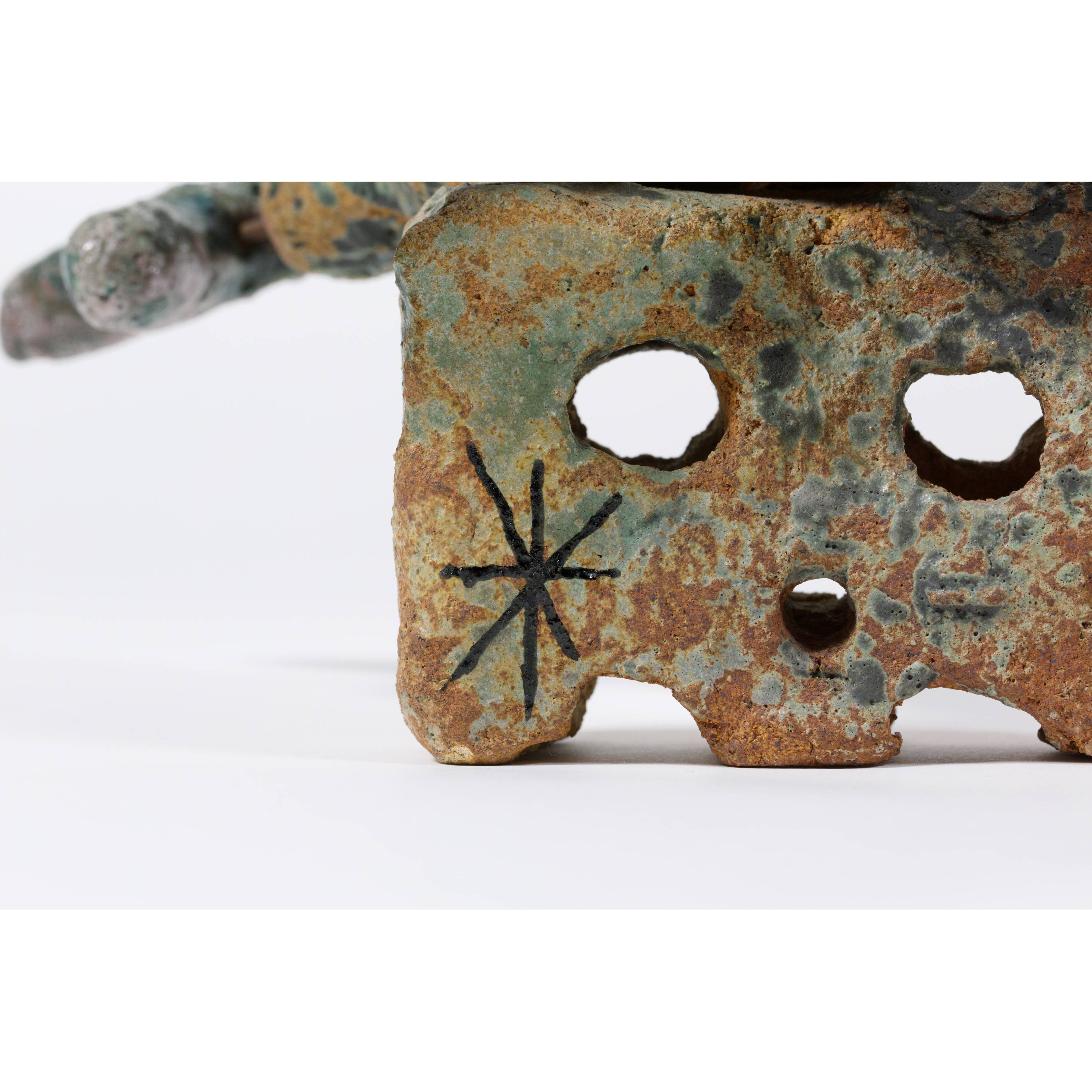
Working with ceramics offered Miró the opportunity to explore new creative paths. In collaboration with the ceramist Josep Llorens Artigas and later also with his son Joan, he further developed his art in a new materiality. In addition to painted vases and bowls, he also strove to realise new forms of sculpture. Analogous to other works that he composed using found objects, there are also composites in his ceramic oeuvre with found and newly created material. This is also the case in "Le lézard", in which the lower part probably represents a kind of "brick" on which a zoomorphic figure was placed. The ensemble was then partly covered with a uniform glaze. Miró and Artigas both signed, Miró additionally painted on one of his characteristic stars. The resulting ceramics are always unique; a pretty, stylised and slightly ironic depiction of a lizard
1956
Steingut mit farbiger Engobenmalerei, glasiert
17,2x33x18,5 cm
An der Unterseite von dem Künstler und von dem Keramiker signiert "Miro / ARTIGAS"
Joan Punyet Miró/Joan Gardy Artigas, Joan Miró and Joseph Llorens Artigas, Ceramics, Catalogue raisonné, 1941-1981, Paris 2007,
Slg. Hermann Wünsche, Bonn
Galerie Maeght, Paris, dort erworben von
Privatsammlung
Auktion Christie’s, London, 19.6.2007,
Privatsammlung
Auktion Sotheby’s, New York, 15.11.2016,
Internationale Privatsammlung
José Pierre/José Corredor-Matheos, Céramiques de Miró et Artigas, Paris 1974,
Francesc Miralles, Llorens Artigas, Barcelona 1992,
Paris 1956, Galerie Maeght, Miró-Artigas, Terres de Grand Feu, cat. Derrière le miroir (no. 87-88-89),
Minimal berieben, in sehr guter Gesamterhaltung
Die Arbeit mit Keramiken bot Miró die Möglichkeit, neue kreative Wege zu gehen. In Zusammenarbeit mit dem Keramiker Josep Llorens Artigas und später auch mit dessen Sohn Joan entwickelte er seine Kunst in einer neuen Materialität weiter. Neben bemalten Vasen und Schalen war er bestrebt, auch neue Formen der Plastik umzusetzen. Analog zu anderen Arbeiten, die er mittels gefundener Gegenstände komponierte, finden sich im keramischen Œuvre auch Komposite mit gefundenem und neu geschaffenem Material. So auch in "Le lézard", bei welchem der untere Teil wohl eine Art "Backstein" darstellt, auf den eine zoomorphe Figur aufgesetzt wurde. Das Ensemble wurde danach zum Teil mit einer einheitlichen Glasur überzogen. Miró und Artigas haben beide signiert, Miró zusätzlich noch einen seiner charakteristischen Sterne aufgemalt. Die so entstandenen Keramiken sind stets Unikate; eine hübsche, stilisierte und leicht ironische Darstellung einer Echse