- FR


 S’inscrire
-
- Ventes Classiques
- Ventes passées
- Plus
- Acheter
- Vendre
- Plus
- Galerie
- Commerce d'art
- Maison d'Édition
- Kornfeld aujourd’hui
- L'histoire de la Maison
- Informations


Note : L'image ne peut pas être affichée pour des raisons légales. Pour plus d'informations, voir le PDF du catalogue : Lien vers le PDF


Pistoia 1910 - 1980 Viareggio


1948
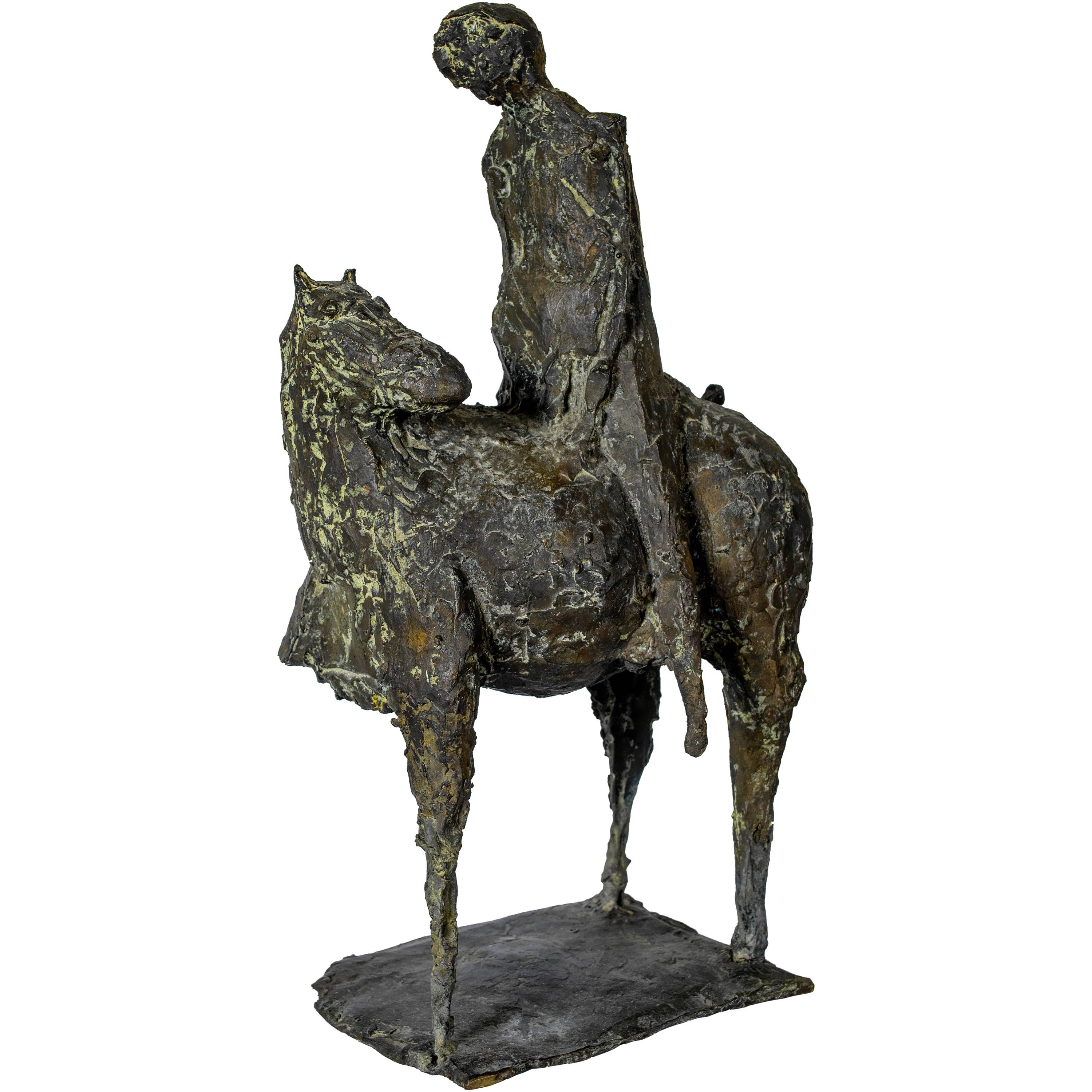
Bronze
50x28x20 cm
On the croup with the artist's monogram "M.M" and on the base again with the artist's monogram "M.M" and the foundry stamp "Fonderia d'Arte / MAF / Milano"
Abraham M. Hammacher, Marino Marini, Sculpture, Painting, Drawing, London 1970, no. 125
Certificate of authenticity of the Fondazione Marino Marini, dated 21 Dezember 2017, enclosed. The bronze is registered in the archive under number 346
Hanover Gallery, London
Louise le Brocquy, London
Private collection England
International Private Collection
Beautiful cast, with structured patina. In impeccable condition
Marini's early sculptural works can be described as neoclassical, one can feel his interest in antiquity and the Renaissance, which were and are present throughout Italy. A classical antique and later repeatedly taken up type is the "equestrian statue", which shows the ruler in victory pose on his horse. From the mid-1930s onwards, this motif can be traced in the artist's oeuvre. From 1943 to 1947 he went into exile in Switzerland with his wife Marina. There he met Alberto Giacometti, Fritz Wotruba, Otto Bänninger, Hermann Haller and Germaine Richier, among others; his encounters with these artists had a lasting influence on his style. And so it is above all those works created after his exile in Ticino that become iconic in sculpture after the Second World War. The groups of works by the "Cavalli" (horses) and the "Cavalieri" (riders) become image-forming for art history. They are no longer images of rulers, but rather symbioses of a human being who, according to Marini, emphasizes the "vertical", and a horse who emphasizes the "horizontal". The incomparable sculptures often oscillate between the objective representational and expressive abstraction. In addition to the rather "cheerful" appearing riders, especially the "injured" horse sculptures, like the one offered here, belong to the highlights in the master's oeuvre. The sculpture was created in plaster in 1948 and was cast in four bronzes. A "compact" and extremely expressive work
1948
Bronze
50x28x20 cm
Auf der Kruppe mit dem Künstlermonogramm "M.M" sowie auf der Basis noch einmal mit dem Künstlermonogramm "M.M" und dem Giesserstempel "Fonderia d'Arte / MAF / Milano"
Abraham M. Hammacher, Marino Marini, Sculpture, Painting, Drawing, London 1970,
Echtheitsbestätigung der Fondazione Marino Marini, datiert vom 21. Dezember 2017, liegt vor. Die Bronze ist unter der Nummer 346 im Archiv eingetragen
Hanover Gallery, London
Louise le Brocquy, London
Privatsammlung England
Internationale Privatsammlung
Schöner Guss, mit strukturierter Patina. In tadelloser Erhaltung
Marinis frühe plastische Arbeiten können als neoklassisch bezeichnet werden, man spürt sein Interesse an der Antike und der Renaissance, die in ganz Italien präsent waren und sind. Ein klassisch antiker und später immer wieder aufgenommener Typus ist das “Reiterstandbild”, das den Herrscher in Siegerpose auf seinem Pferd zeigt. Ab Mitte der 1930er Jahre lässt sich dieses Motiv im Œuvre des Künstlers nachweisen. Von 1943 bis 1947 begibt er sich mit seiner Frau Marina ins Exil in die Schweiz. Dort trifft er sich unter anderem mit Alberto Giacometti, Fritz Wotruba, Otto Bänninger, Hermann Haller oder Germaine Richier; die Begegnungen mit diesen Kunstschaffenden beeinflussen seinen Stil nachhaltig. Und so sind es denn vor allem diejenigen Arbeiten, die nach seinem Tessiner Exil entstehen, die ikonisch in der Bildhauerei nach dem Zweiten Weltkrieg werden. Die Werkgruppen der “Cavalli” (Pferde) und der “Cavalieri” (Reiter) werden bildprägend für die Kunstgeschichte. Es sind nicht mehr Herrscherbilder, sondern Symbiosen eines Menschen, der nach Marini das “Vertikale”, und eines Pferdes, das die "Horizontale" betont. Die unvergleichlichen Plastiken oszillieren häufig zwischen der sachlichen Gegenständlichkeit in Richtung expressiver Abstraktion. Neben eher “fröhlich” anmutenden Reitern gehören gerade die “versehrten” Pferdeplastiken, wie die hier angebotene, zu den Höhepunkten im Schaffen des Meisters. Die Plastik entstand 1948 in Gips und wurde in vier Bronzen gegossen. Eine “kompakte” und äusserst ausdrucksstarke Arbeit
Note : L'image ne peut pas être affichée pour des raisons légales. Pour plus d'informations, voir le PDF du catalogue : Lien vers le PDF